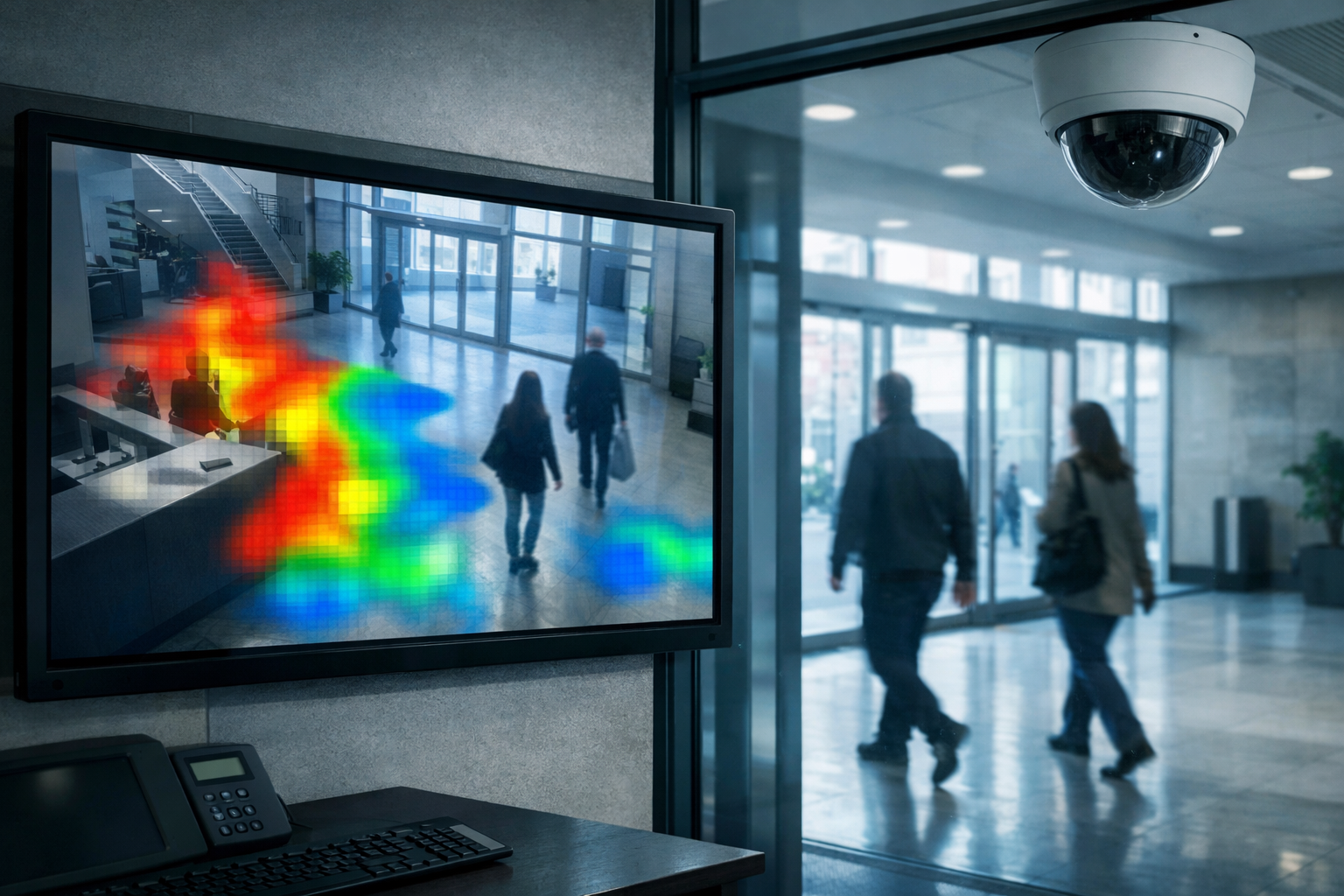
| What is an ai detection heatmap pilot?An AI (Artificial Intelligence) detection heatmap pilot is a camera-based, color-coded view of video-derived activity run as a short test to see whether its measurements answer a specific operational question. It operates by pairing heatmap output with matched reference observations, separating disagreement types (for example missed or extra detections, zone assignment, tracking continuity, and aggregation rules), and documenting pre-agreed acceptance conditions, responsibilities, and a scorecard of evidence. That approach helps you decide if results are operationally useful, what conditions require retest or narrowing, and whether limited deployment or further work is warranted. |
An AI detection heatmap pilot helps you test whether camera-based activity patterns can answer an operational question—not just produce an attractive demo. Here, the term means a color-coded view of video-derived activity, not a tool for detecting AI-generated text. The real issue is whether its measurements support your decision.
This guide shows how to compare results with reference observations, separate different errors, and document acceptance rules. For security, facilities, operations, IT, and procurement teams, that creates a basis for evaluating a proposal before committing to broader deployment.
What should an AI detection heatmap pilot prove?
A useful heatmap pilot separates three questions:
• Measurement validity: Does the output represent the intended metric, such as occupancy rather than distinct arrivals?
• Operational usefulness: Could the finding inform a decision, such as reviewing where reception queues form?
• Implementation fit: Can the proposed setup work within your computing resources, review workflow, access controls, and retention rules?
The heatmap fundamentals explain why the metric and legend matter. Repeated observations of someone waiting should not be interpreted as additional visitors without evidence supporting that calculation.
How can you build a useful reference sample?
A reference sample pairs heatmap output with observations covering matching zones and time windows.
Agreeing on what counts
Counting definitions distinguish boundary crossings, people present, and time spent in an area. A zone sketch helps explain edge cases; the background on ai camera detection clarifies how detections differ from the measurements built from them.
Sampling relevant conditions
Busy periods, lighting changes, and people obscuring one another may deserve separate review. Recorded footage allows replay; live observation may help when the camera view leaves context unclear.
Recording reviewer disagreements
Human review can also be wrong. Reviewers can record the timestamp, competing interpretations, and resolution in a shared log. Unsettled cases remain uncertain rather than becoming automatic successes or failures.
Which kinds of disagreement should the pilot separate?
Disagreements in heatmap validation can arise at different layers. These categories guide diagnosis; they are not supplier performance claims
| Dimension | Symptom and evidence to inspect | Likely layer and retest question |
|---|---|---|
| Missed detections | Visible person without a matching detection; synchronized footage and event records | Detection; same miss under comparable conditions? |
| Extra detections | Detection without a matching person; footage and detection overlays | Detection; duplicate observation or background trigger? |
| Zone assignment | Same position assigned differently; zone boundaries overlaid on footage | Zone configuration; consistent assignment at the boundary? |
| Tracking continuity, where used | One person's path split across identifiers; tracking overlay | Tracking; same break during a matched retest? |
| Aggregation rules | Matching events but different totals or colors; event records and calculation settings | Aggregation; agreement with the same counting rules? |
| Interpretation | Hot area treated as more visitors; legend and metric definition | Reporting; visitor count, duration, or repeated observations? |
| Reference disagreement | Reviewers recording different results; observation notes and source footage | Review method; agreement after clarifying definitions? |
An overall “accuracy” label is incomplete unless it defines the comparison, matching rules, and included observations. Agreement on detections alone does not establish reliable visitor totals, dwell time, or color intensity.
How should test conditions and acceptance rules be agreed?
Acceptance rules for heatmap evaluation work best when agreed before anyone sees the results. A practical agreement includes:
• Conditions and exclusions: Relevant busy and quiet periods, camera outages, missing footage, and untested scenarios.
• Responsibilities: An operations or facilities owner assesses consequences; reviewers compare evidence; IT or analytics staff investigate technical issues.
• Decision rules: Acceptable disagreement for the intended use, escalation triggers, and retest requirements.
No universal accuracy target or sample size is assumed here. Later rule changes remain documented revisions, not a reason to relabel the original outcome.
Camera suitability is a separate input; the existing ai detection heatmap guide covers that assessment. If useful, your proposed test conditions could be a starting point for a discussion with AvidBeam.
What evidence should the final pilot scorecard contain?
The scorecard connects heatmap results to a decision without turning a limited finding into a blanket performance claim.
Evidence and configuration
• Test and setup: Operational question, configuration reference, camera views, zones, metric, and aggregation rules—how observations are combined.
• Comparison record: Observation period, conditions, gaps, reference method, and supporting clip or screenshot identifiers.
• Finding and responsibility: Observed disagreement, operational consequence, reviewer, unresolved issue, issue owner, and sign-off.
Ownership of the next decision
The operational owner can approve usefulness, while technical and data-governance reviewers assess their areas. Each open issue identifies who investigates it and which decision remains blocked.
What happens if the pilot only partly meets expectations?
A partial pass is a reason to examine scope, not assume rollout. For example, useful quiet-period results do not resolve uncertainty about crowded arrivals.
• Retest: Investigate a specific explanation with changes documented and unrelated settings stable.
• Narrow: Consider only the zones or conditions supported by the evidence.
• Investigate: Resolve an unclear cause before assigning a performance label.
• Pause: Wait when evidence, access, or retention questions prevent responsible review.
Frequently asked questions
What should we measure during an AI detection heatmap pilot?
A camera heatmap comparison tests the chosen metric against reviewed observations, then asks whether remaining differences could change an operational decision.
How do we choose acceptance thresholds?
The consequences guide the threshold: broad pattern analysis and precise zone counts may need different tolerances. Agreement comes before result review.
Can manual review serve as the reference?
Yes, with shared definitions and a record of disputed cases. Replaying a clip can help resolve differences, but some observations may remain inconclusive.
Which day-to-day conditions belong in testing?
Your heatmap pilot should reflect relevant lighting, crowding, and visibility changes. An untested condition stays outside the conclusions.
Who needs to sign off on the findings?
Typically, the operational owner, technical lead, and person responsible for evidence handling contribute. Procurement or other stakeholders may join where their approval is relevant.